
Termites eat quietly. We look where they start.
Eastern subterranean termites are active in the Lowcountry nearly year-round, and they come up through the crawlspace before anyone sees a swarmer. Every inspection covers the soil line, the piers, the sill and the moisture that draws them.
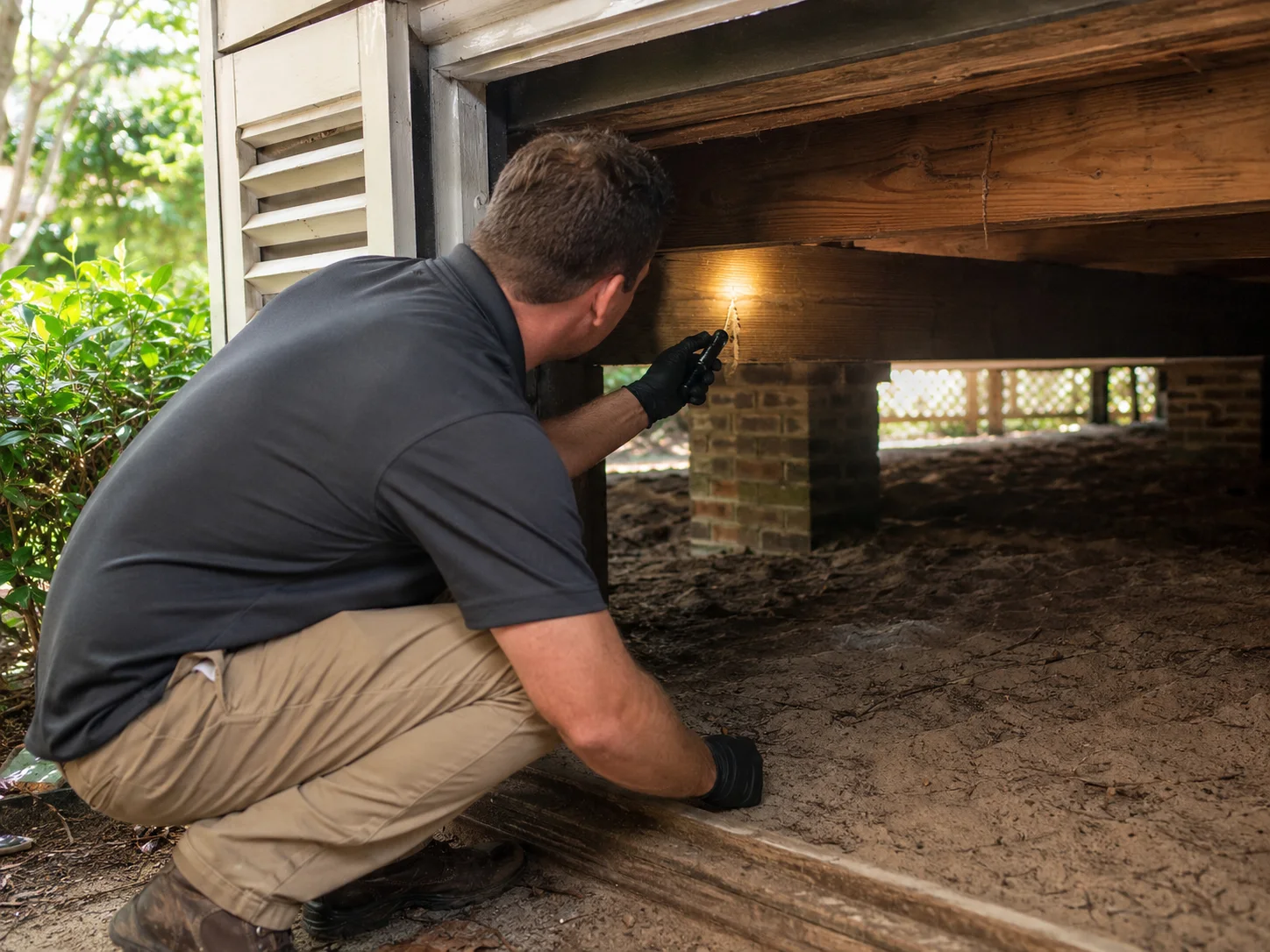
What we look for — and what you might see first
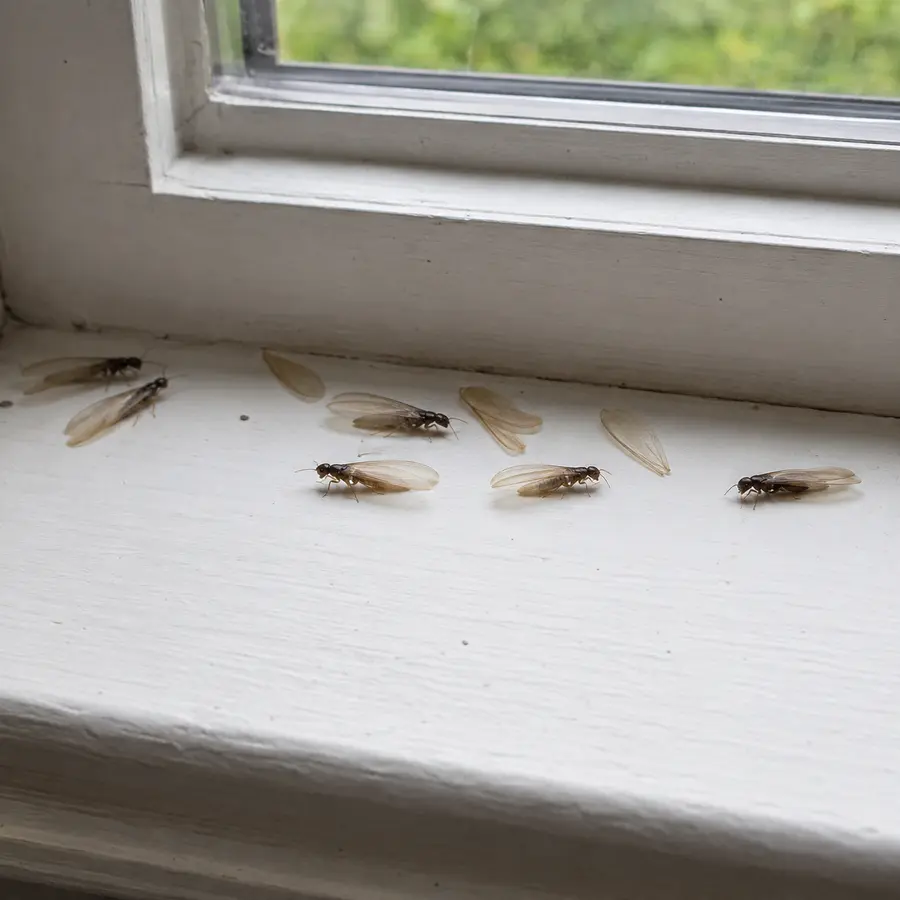
Swarmers indoors
Winged insects or shed wings on a windowsill in spring — the clearest sign of an active colony.
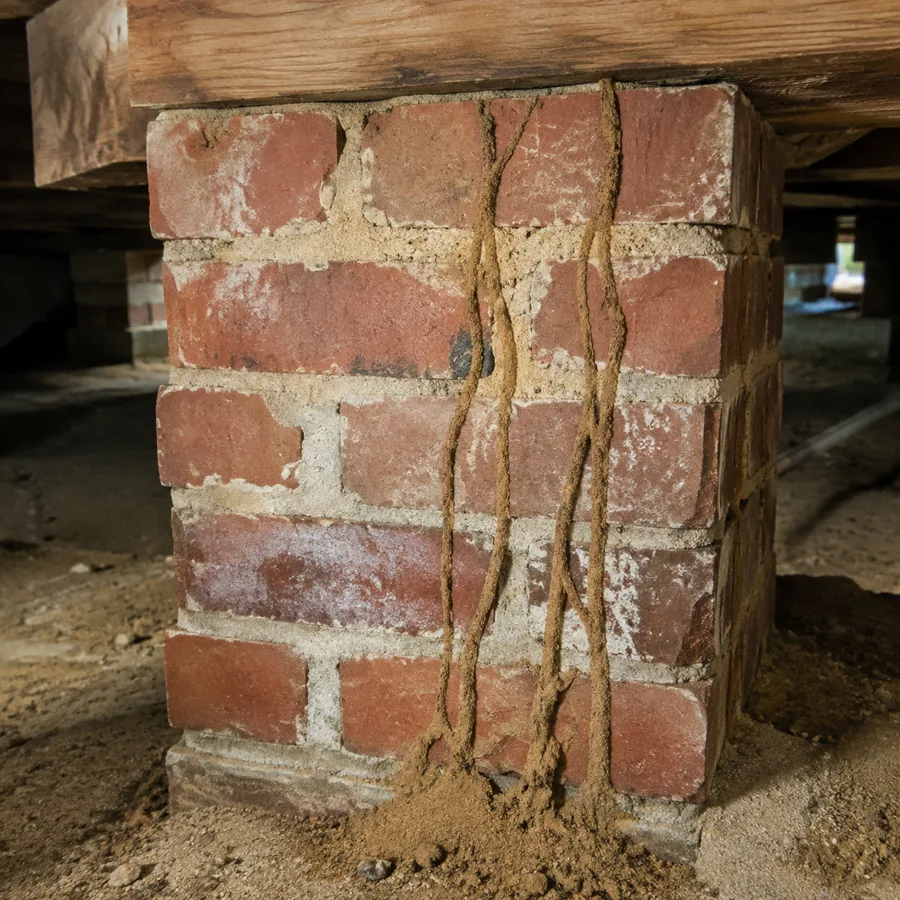
Mud tubes
Pencil-width soil tunnels running up piers, foundation walls or plumbing penetrations.
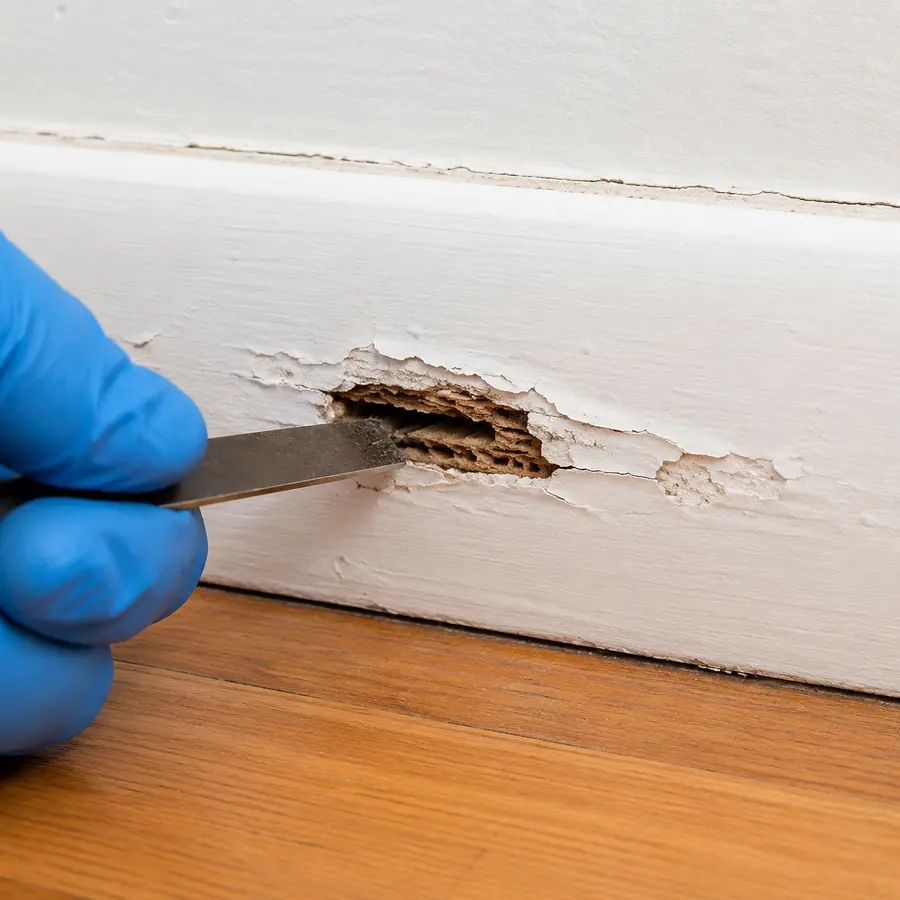
Hollow-sounding wood
Baseboards or trim that sound papery, or paint that blisters over a soft spot.
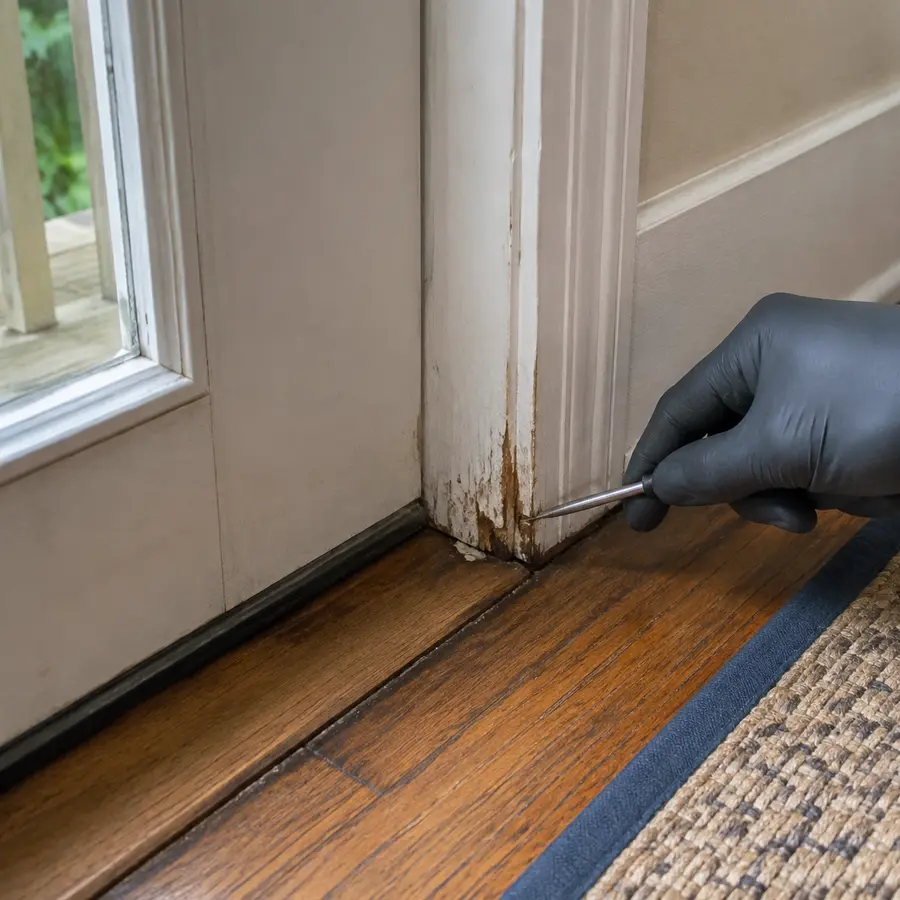
Sticking doors, soft floors
Often moisture damage plus termites — which is why we check the crawlspace on every visit.
Three ways we treat
Which one depends on the construction, the soil and how far it's gone. The inspection tells us — we don't sell one method to every house.
Liquid soil barrier
Most homesA treated zone in the soil around the foundation and interior piers. Termites can't cross it, and it protects the whole structure for years.
In-ground bait system
Monitored stations around the perimeter that eliminate the colony itself. Good for slabs, wells nearby, or where drilling isn't practical.
Spot & wood treatment
Direct treatment of active galleries, sill plates and joists — paired with a barrier, plus borate on exposed framing during repairs.
What the annual bond covers
A Proterm bond is a written contract, not a handshake. Re-inspected every year, transferable when you sell, and it includes repair — read the sample before you sign.
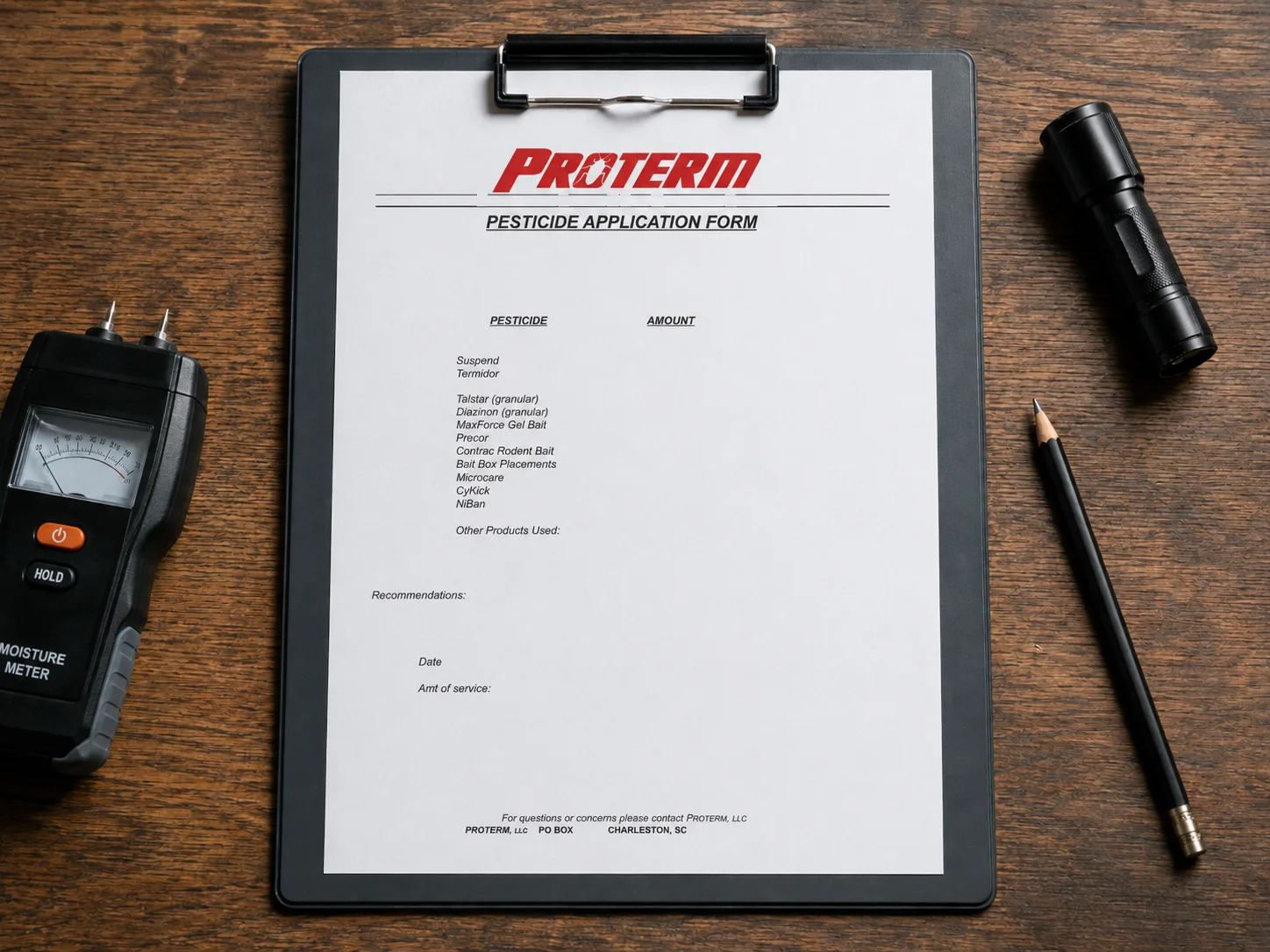
You get the evidence, not a verdict
- •Photos of every area of activity or damage, labelled by location
- •Moisture readings at the sill, joists and subfloor
- •A diagram of the structure with treatment points marked
- •A flat price, and what we'd do first if you're budgeting
Questions we get every week
I saw swarmers. Do I definitely have termites?
Indoors, almost certainly a colony in or under the structure. Outdoors it may be a neighbor's. Either way the inspection is free.
Do I have to leave the house?
No. Barrier and bait work happens outside and in the crawlspace. Interior spot treatment is localized and same-day.
How long does treatment take?
Most homes are a single day. Bait installation is a couple of hours, then monitored quarterly.
Is it safe for pets and the garden?
Products are applied to soil and structure at label rate. We'll tell you exactly what we're using and how long to stay off treated areas.
Rentals, historic buildings and churches
Crawlspace and pest work on tenant-occupied properties, scheduled around leases, with photo documentation per unit for owners and insurers.
We can be there this week
Free quote, written report, no obligation.